

Blog Post: Back-to-School: New School Year, Better Habits


Published 23 October 2025 | 7 min read
Every sustainable lifestyle starts with a few small choices, ones that add up over time and make a lasting difference. Building a reusable routine isn’t about overhauling everything at once; it’s about finding swaps that feel natural, convenient, and easy to maintain.
From your morning coffee to your evening skincare, reusables help cut waste, save money, and simplify your daily flow. Once these habits stick, they don’t just reduce your footprint; they redefine how effortless sustainability can be.
1. Start with What You Use Most
The best place to begin is with your most frequent disposables. Take note of what you throw away daily, plastic bottles, coffee cups, or wipes, and look for reusable versions.
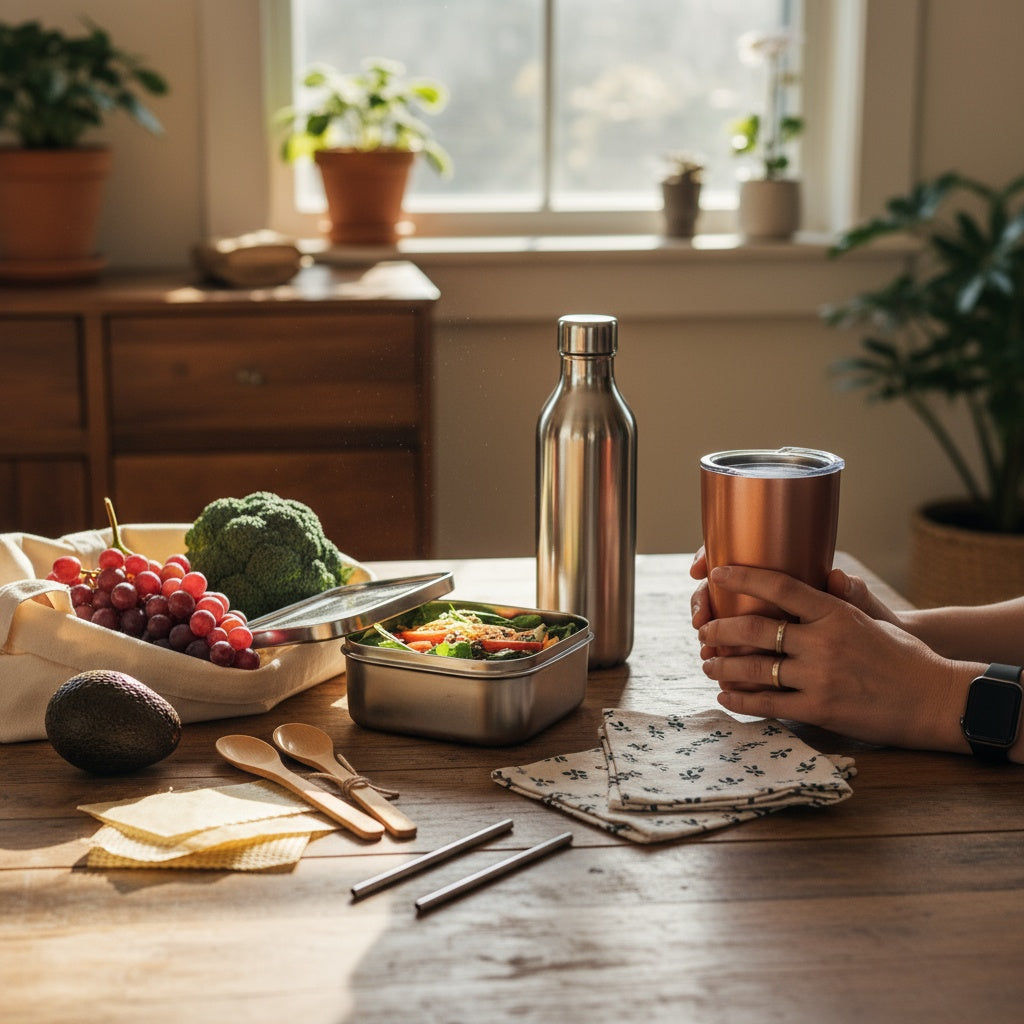
A stainless steel bottle, a bamboo cutlery set, or a glass food container can replace hundreds of single-use items each year. These simple upgrades not only declutter your routine but also help you feel more mindful with every use.
Sustainability becomes much easier when your essentials are designed to last.
2. Bring Reuse into Your Morning Routine
Morning rituals often create the most waste, plastic toothbrushes, shampoo bottles, and takeaway coffee cups. Try these swaps:
-
Bamboo toothbrush instead of plastic
-
Refillable shampoo or conditioner bars instead of bottled formulas
-
Reusable travel mug for your commute
These swaps don’t just reduce waste, they elevate your morning rhythm. A cleaner shelf, fewer plastics, and a more intentional start to the day set a calm, conscious tone.
3. Make Refillables Your New Default
Refillable products are one of the simplest ways to keep reusables in motion. Whether it’s household cleaners, soaps, or pantry goods, refills cut out unnecessary packaging and keep your containers in use longer.
Many eco brands now offer concentrates, tablets, or bulk stations for home essentials. Once you’ve set up a refill corner or storage area, it becomes second nature, saving both space and single-use waste.
4. Rethink Storage and Transport
How you store and carry things matters just as much as what you buy. Swap plastic wraps and zip bags for silicone pouches, beeswax wraps, or stainless-steel tins.
For meals on the go, reusable lunch boxes and utensils are both practical and stylish. They make your daily routine feel organized and waste-free, proof that sustainability can look good and work hard.
5. Keep Reusables Visible
The key to making swaps stick is to keep them where you’ll actually use them. Store reusable grocery bags by the door, place water bottles in plain sight, and keep food containers near your prep space.
Out of sight often means out of mind, but visible reusables become part of your routine. Over time, they replace convenience culture with conscious comfort.
6. Wash, Reuse, Repeat
Maintaining reusables is simple with the right care habits. Wash cloths, bottles, and utensils regularly with mild, eco-safe soap, and let them air dry completely.
Choose durable materials, like stainless steel, glass, or silicone, that can withstand daily wear. When your reusables last, your impact multiplies. Every refill or reuse saves resources, money, and time.
7. Build Habits That Last
Sustainability thrives on consistency, not perfection. Start small, stay patient, and celebrate your progress.
Each reusable swap replaces dozens, or even hundreds, of disposable items over time. The longer you stick with your reusable routine, the more natural it feels, until living sustainably isn’t something you try to do, it’s just how you live.
At mimro, we believe reusables are more than a trend; they’re the foundation of a sustainable future. Every reusable cup, bottle, or container represents a choice that supports both you and the planet.
By curating high-quality, long-lasting essentials, we make it easy for you to build habits that last. Because the more you reuse, the more you renew, not just your products, but your purpose.


